Yampolsky Press
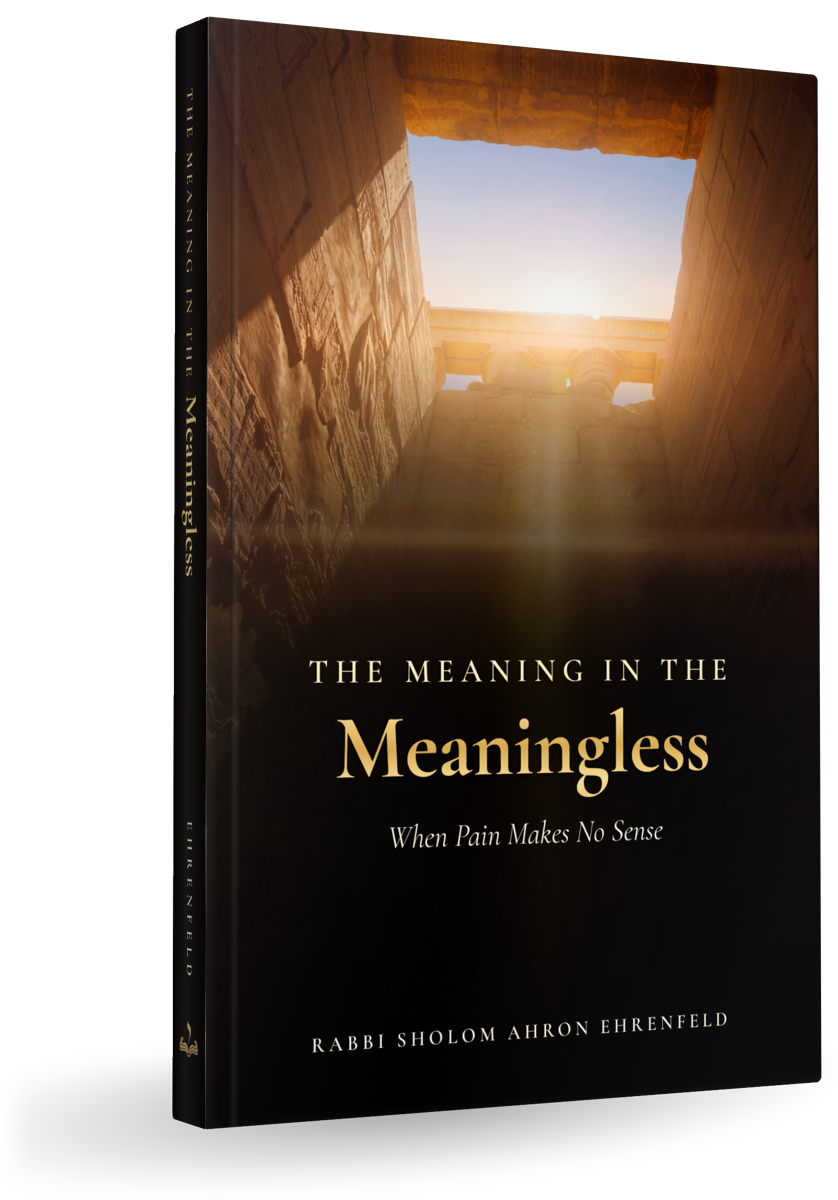
The Meaning in the Meaningless by Rabbi Sholom Ahron Ehrenfeld, softcover and hardcover
Reserve one of 100 numbered copies

The Meaning in the Meaningless

When Pain Makes No Sense
Rabbi Sholom Ahron Ehrenfeld

If He loves me, why does He push me away? In thirteen chapters drawn from his shiurim on TorahAnytime, Rabbi Sholom Ahron Ehrenfeld takes up the questions of a Yid in pain.

100 numbered copies, for the Rav’s founding readers

100 copies carry a number, set on the leaf at the front — 100 in total, across both bindings, not 100 of each. Reserved copies are 10% off, and you may add a dedication or inscription at no charge. The sefer itself is not limited — the numbered copies are.

Softcover

6 × 9 in
$17.99$19.99
  • One of the 100 numbered copies
  • Dedication or inscription, free if you want one
  • 10% off the published price

Hardcover

6 × 9 in · case bound
$24.99$27.99
  • One of the 100 numbered copies
  • Dedication or inscription, free if you want one
  • 10% off the published price
  • The one to give

Delivery is calculated for your country and shown before you pay.

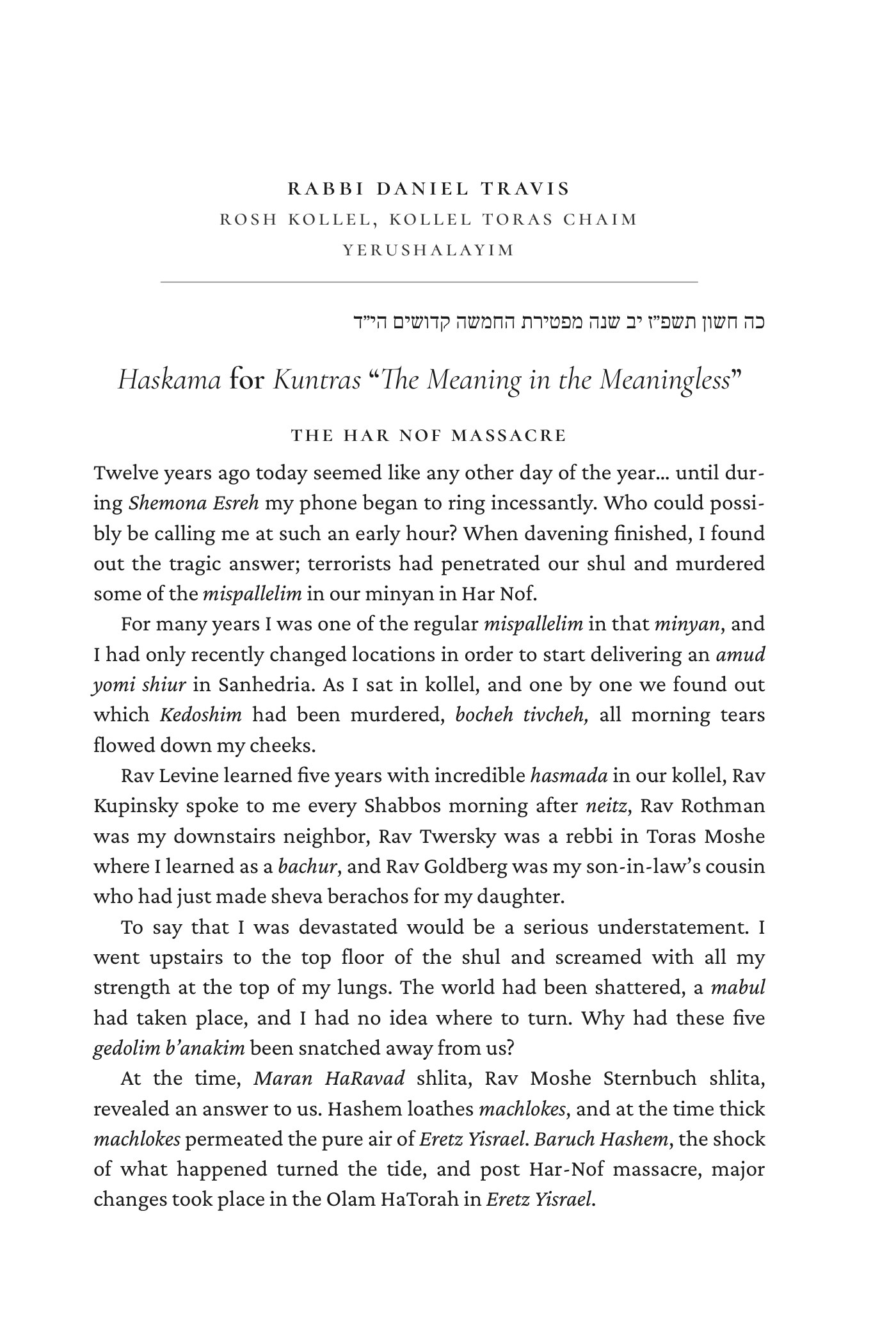
Look inside

The three haskamos, from Rabbi Moshe Donnebaum, Rabbi Daniel Travis and Rabbi Chaim Tzvi HaKohen Deutsch, the contents, and the opening of chapter one, Why Hashem Tests Us. Tap a page to read it.

A page from the seferA page from the seferA page from the seferA page from the seferA page from the seferA page from the seferA page from the seferA page from the seferA page from the sefer

Read the same pages as a PDF — it opens in your browser, and it prints.

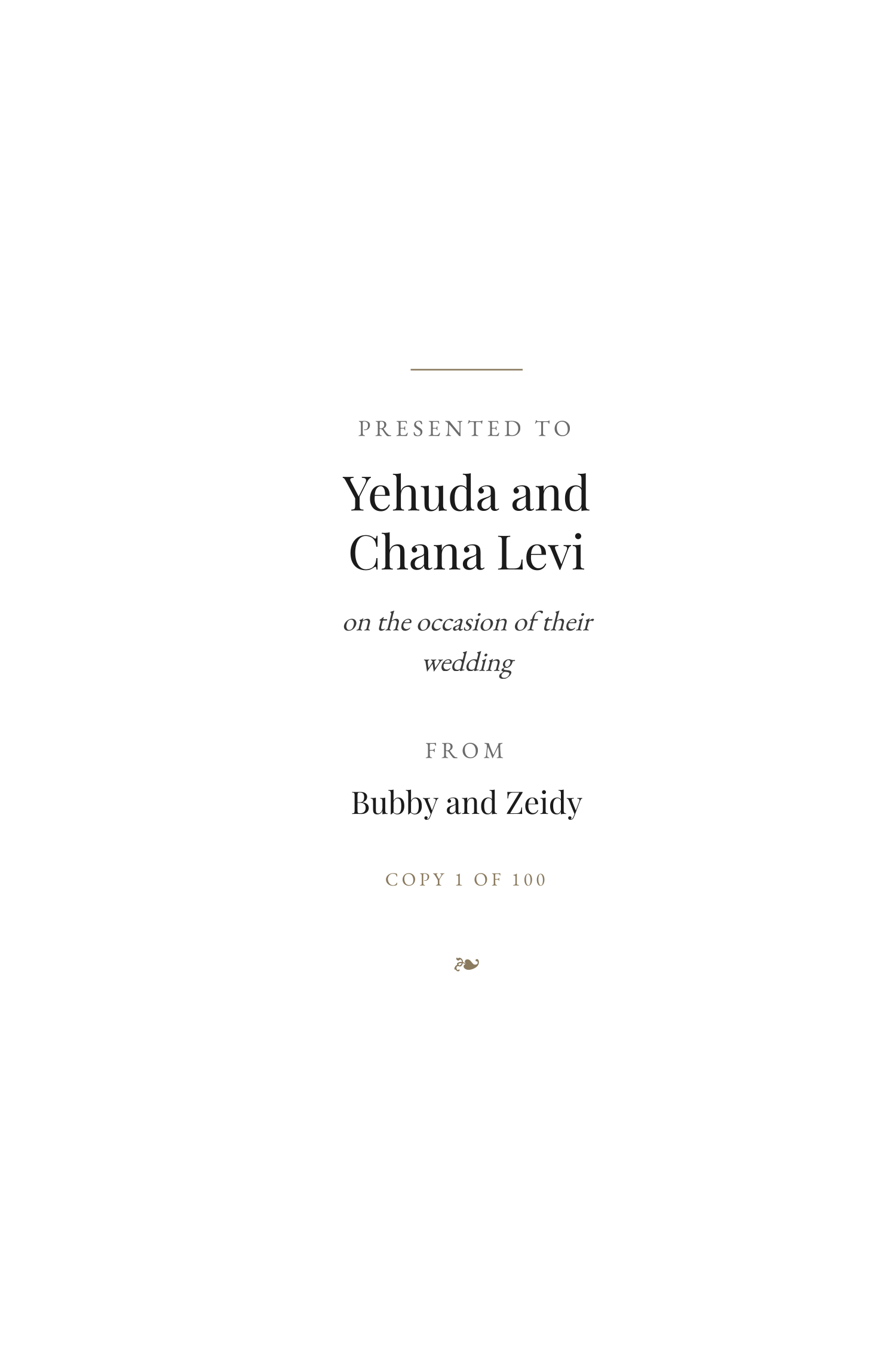
A dedication, if you want one

A page at the front of your copy, set in the book’s own type — lizecher nishmas, a name for a refuah, a gift for a chosson and kallah, or simply your family’s name in the sefer. Write the words at checkout and we set them by hand.

Free, and entirely optional — leave it blank and your copy comes plain and numbered. Available only on reserved copies.

A dedication leaf, set in the book’s own type
The leaf as it appears, on its own page at the front of the sefer. The names shown are an example.
Prefer not to order online?
Text +41 76 233 56 32

Send us the sefer, the binding and your address. We reply with a link to pay, and set your dedication from your message.

What is inside

Thirteen chapters on the questions a Yid in pain actually asks.

Why Hashem tests us, the furnace of suffering, hester panim, bitachon, tefillah when the words feel empty and unheard, the weight a person carries that isn’t his to bear, the lonely road, and families that unravel.

Each chapter is drawn from the Rav’s own shiurim, set down in his words, with the sources he brings: the Gemara, the Zohar, the Maharal, the Chassidic masters.

“Like Pinchas, he has taken his spear in hand and penned a powerful sefer about some of the most cutting-edge issues of our times, and how we can strengthen our emunah to deal with them according to the infinite wisdom that the Torah lays down in order to overcome these challenges.” Rabbi Daniel Travis, Rosh Kollel, Kollel Toras Chaim Yerushalayim.

About the author

Rabbi Sholom Ahron Ehrenfeld lives in Lakewood, New Jersey, where he served as a maggid shiur at Mesivta Keren Orah. He is regularly invited to yeshivos and communities to speak on chizuk and hashkafa.

He grew up observing both the chassidic and the yeshivish worlds of thought. In his learning, he took in mussar, Chassidus, Kabbalah and halacha together.

He has recorded thousands of shiurim on TorahAnytime and Kol HaLashon, in Yiddish, lashon hakodesh and English. They range across the breadth of Torah: sugyos throughout Shas, a series on the foundations of emunah, chinuch, and the inner life of avodas Hashem.

Many of those shiurim are on suffering and bitachon, because so many of the letters he receives are on these topics. Once a week he takes calls from listeners from Australia to England to the US, each carrying something heavy: illness, loss, loneliness, parnassah, a child who is struggling. “You can’t help anybody,” he says, “if you’re not experiencing their pain.” This sefer grew out of those letters and calls.